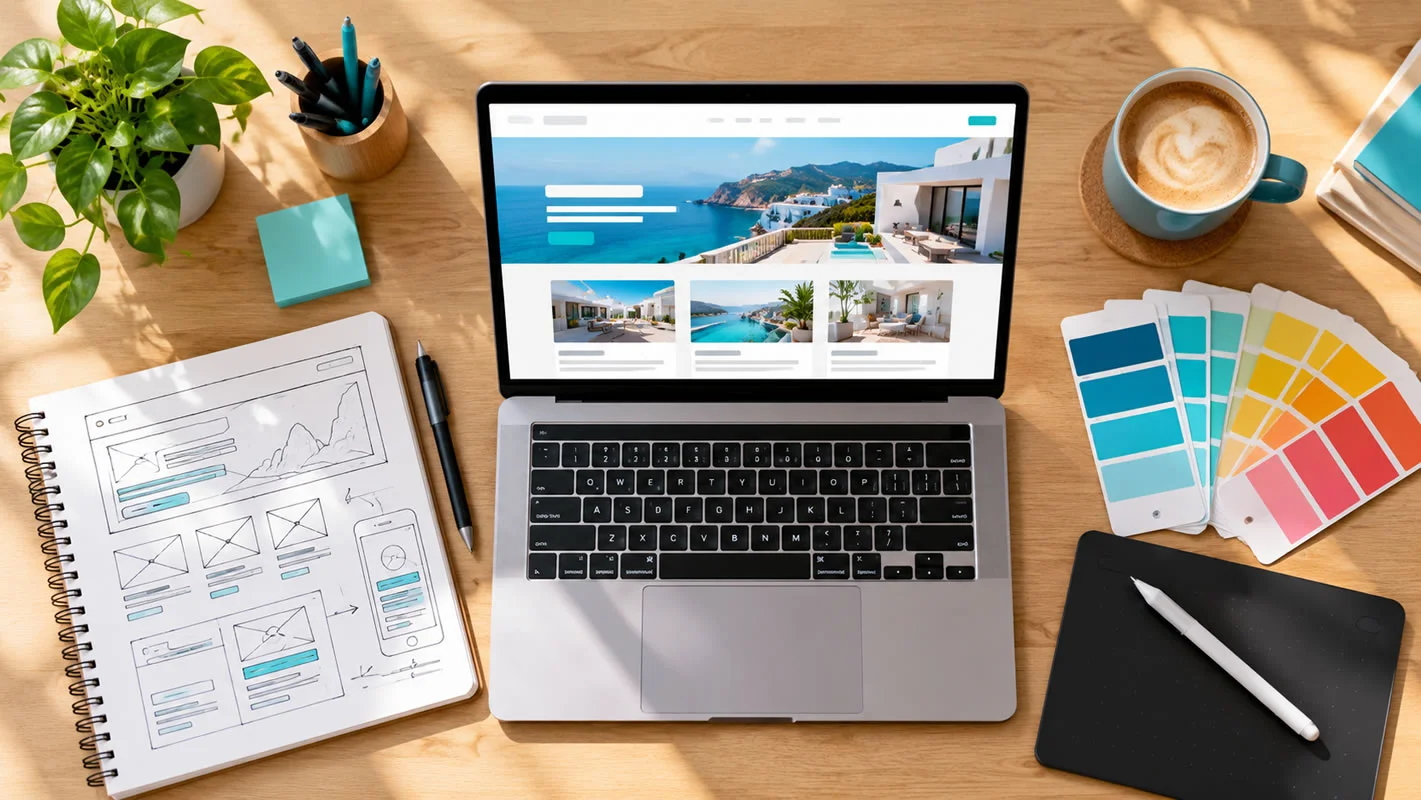
Understanding Web Designing and its impact on your Business
Web design is the process of creating and designing a website to make it visually appealing, user-friendly, and easy to navigate. It is a crucial aspect of creating a website that is able to effectively communicate a business's message and engage with its target audience.

Core Elements of Effective Web Design
User Experience (UX) and User Interface (UI) Design
These two elements are essential for creating a website that is easy to use and navigate. UX design focuses on the overall experience a user has when visiting a website, while UI design focuses on the layout and visual elements — together, they create a website that is both functional and visually pleasing.
Responsive Design
With the increasing use of mobile devices to access the internet, it's crucial that websites are designed to be responsive, meaning they can adjust to different screen sizes and resolutions to ensure a positive user experience on any device.
Content and Branding
The content on a website should be clear and easy to understand, while also accurately representing the brand. The website should have a consistent design and branding, using colors, fonts, and imagery that align with the business's overall image.
Search Engine Optimization (SEO)
A website should be optimized for search engines so that it can rank higher in search results and be easily found by potential customers, achieved through relevant keywords, high-quality content, and backlinks.
Accessibility
A website should be designed to be accessible to people with disabilities, such as those who are blind or have low vision, using alternative text for images, closed captions for videos, and a clear, simple layout.
Web design is a crucial aspect of creating a website that is able to effectively communicate a business's message and engage with its target audience. By focusing on elements such as user experience and interface, responsive design, content and branding, search engine optimization, and accessibility, a website can be designed that is visually pleasing, user-friendly, and easy to navigate. This will help the website rank higher in search results, attract more visitors, and ultimately increase sales and revenue for the business.
"A business with a professional, user-friendly website will be able to reach a larger audience, increase sales, and build customer loyalty."
Impact of Web Design on Your Business
Having a well-designed and functional website is crucial for any business in today's digital age. A good website can provide a number of advantages for a business, including increased visibility, improved customer engagement, better communication, increased efficiency, greater flexibility, cost-effectiveness, and better analytics.
Increased visibility
A well-designed website can help increase a business's visibility by making it easier for customers to find the business online — especially important for small businesses without large advertising budgets.
Improved customer engagement
A good website provides customers with a positive and engaging experience, making it more likely that they will return to the site in the future, leading to increased sales and customer loyalty.
Better communication
A website allows businesses to provide customers with detailed information about their products and services, and to contact the business directly — helping build trust and improve communication.
Increased efficiency
A website can automate many processes, such as taking orders and payments, which can save businesses time and money.
Greater flexibility
A website can be accessed from anywhere, at any time, making it easy for customers to shop or access information about a business, even when it's closed.
Cost-effective
Having a website is relatively inexpensive compared to other forms of advertising, and it can reach a much larger audience.
Better analytics
A website allows businesses to collect data on customer behaviour, such as time spent on site, pages visited, and products of interest — data that can be used to improve the website and make better business decisions.
The Wrap Up
In conclusion, having a good website can provide a number of advantages for businesses, including increased visibility, improved customer engagement, better communication, increased efficiency, greater flexibility, cost-effectiveness, and better analytics. A business with a professional, user-friendly website will be able to reach a larger audience, increase sales, and build customer loyalty.